News_ NZ Trade andEnterprise Education Newsletter

NZ Educated Students Rise to the Top of Global Career Ladder
NZ Student Achievements Among the Best in the World
Students
Use Latest Technology to Study Forest Regeneration
Offshore
Nursing Degree
a First
NZ Reaching for the Stars in International Telescope Projects
New Zealand Trains - and Welcomes - Top Scholars
International Students Welcomed the Kiwi Way
New Zealand Scientist Wins World's Top Dairy Honour
Students Tutored by Female Robot Called Maria
New Zealand.com
New Zealand Educated
Education NZ
Industry NZ Educated
Investment
New Zealand

March 2005, Issue 2

Welcome to Issue Two of Brain Wave, a new quarterly newsletter produced by New Zealand Trade and Enterprise to keep international education staff, allies and colleagues overseas informed of some of the latest and brightest news from New Zealand's education sector.

We hope this newsletter gives you useful examples to help you encourage international students to become "New Zealand Educated". Meanwhile, a significant new international marketing tool has also been launched - http://www.newzealandeducated.com/. Replacing http://www.mynzed.com/, the website features updated profiles of over 250 New Zealand institutions, news stories and alumni profiles, and will soon have more than 30 local language sub-sites for each of our key education markets. Students will be able to find out more about the benefits of becoming New Zealand Educated with ease. For brand licensees, the website also has an industry-only section where branding tools can be downloaded for New Zealand promotions.

We hope you enjoy this issue. Please send feedback and any future story ideas to brainwave@nzte.govt.nz

 
Students Tutored by Female Robot Called Maria
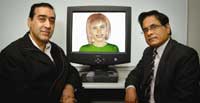
Shahin Maghsoudi (left) and Dr Tiru Arthanari with Maria (centre).

Statistics students at The University of Auckland are being tutored by a well spoken, blonde female tutor with a vocabulary of 203,000 words and who can recall hundreds of thousands of logic and grammar rules - but she's tutoring from behind a computer screen.

Maria, an assistant teacher in the statistics department, is a robot, or artificial intelligence (AI) entity, created over two years of intense work and study by Shahin Maghsoudi, a PhD student and member of the AI Group in the Faculty of Science.

As part of his Masters degree in Computer Science, Shahin embarked on a project to create virtual robots which could be used as teaching assistants, helpdesk operators and web-based marketing assistants. He has already created eight such robots. Of these, Maria is live on the internet, awaiting a patent, and being trialed on a test group of students.

Maria was created through the joint efforts of Shahin and Dr Tiru Arthanari from the University's School of Business. Dr Arthanari teaches inferential statistical methods as part of a research methods paper. His goal in collaborating with Shahin was to create an electronic "assistant" who would be available 24 hours-a-day and seven days-a-week to answer multiple student questions simultaneously as if they were having one-to-one conversations. Dr Arthanari built a special database to fuel Maria, part of which is dedicated to current student profiles. It can be populated either using a "conversation" mode - where students can actually communicate with Maria via the keyboard, or by the student filling in a form when first interacting with the system.

"What we are really doing is creating an illusion. The more care we take about the choice of words, the more effective the interaction will be. A student can easily be put off by abruptness so we needed to create an engaging robot with a polite manner," Dr Arthanari says.

Shahin is a computer engineer from Iran who migrated to New Zealand in 1990. His next project, as part of his PhD studies in the Computer Sciences Department, is to look at commonsense reasoning and ways of "teaching" the robots to make commonsense judgements.

Shahin has already begun collaborating with the Electrical Engineering Department at The University of Arizona to create a virtual teacher of electrical engineering concepts.

To talk with Maria or any of the other robots visit http://www.robot-hosting.com/.To see the University of Auckland's original press release see here.


New Zealand Student Achievements Among the Best in the World

Results from a number of recent international studies and examinations show New Zealand students are high achievers compared with other countries.

An OECD (Organisation for Economic Cooperation and Development) study of well over a quarter of a million 15-year-old students in 41 countries shows New Zealand students are performing significantly above OECD averages and on a par with students in countries like Australia and Canada.

PISA 2003 (Programme for International Student Assessment) assessed students in reading, mathematics, science and problem solving. Overall the PISA study found that New Zealand was a leader compared to other English speaking countries. New Zealand ranks 3rd out of 31 in the world in literacy, 3rd in Mathematics and 6th in science.

Another international study measuring mathematics and science capability among middle primary (Year 5) and early secondary school (Year 9) students also shows New Zealand students typically achieve well above international averages. The Trends in International Mathematics and Science Study (TIMSS) shows that New Zealand was one of just six countries to record a significant improvement in Year 5 achievement in mathematics since the last study was done in 1994/95, and one of nine countries to record improvements in Year 5 achievement in science. The TIMSS study also showed that New Zealand students have a relatively high level of self confidence in their abilities in maths and science and that more students are actively enjoying studying science.

Meanwhile, the Association of Cambridge Schools in New Zealand has announced that 18 New Zealand students achieved "Top in the World" results in a variety of subjects including English Literature, English Language, French, Physics, Spanish, Co-ordinated Science, Economics and Physical Education. Students also did well in the International Baccalaureate in 2004, and a team of University of Otago undergraduate business students also made history when they won the prestigious Program in International Management (PIM) International Case Competition in the US for 2004, competing against MBA students from 53 business schools around the world.

New Zealand's tertiary research capability also continues to receive high acclaim. Cordis reports that the OECD recently declared New Zealand's framework for allocating funding to research, science and technology to be one of the best in the world and ahead of Europe in terms of the structure of its research systems. Other accolades have come from the World Bank, which says New Zealand's economy is the best for doing business globally, and the journal 'New Scientist' describes New Zealand as punching 'way above its weight' in scientific research.

Maintaining world class status is a high priority in New Zealand. For example the Business Schools at the Universities of Auckland and Otago have both recently been awarded prestigious EQUIS accreditation by the European Foundation for Management Development, giving them membership of an elite group of international business schools. The Auckland school also has accreditation from the US-based quality assurance scheme AACSB International, with approval for Otago expected shortly.


Click here for more information on the PISA results, the TIMSS results, the Cambridge Association, and Otago's Case results. The Cordis article is here and referred to in this Nature magazine supplement recently authored on NZ's research capabilities here. See the University of Auckland's press release here.


Students Use Latest Technology to Study Forest Regeneration

Young New Zealanders at two North Island schools are using the latest technologies to learn about forest regeneration and eco system monitoring in a project called 'The Forests of Life'.

Year 7 and 8 students (aged about 11 and 12) are being encouraged to develop a programme that helps them gain awareness and take responsibility for an area of regenerating native forest in their region. The development and management of a restoration plan will be mapped out, implemented and monitored by the students, supported by a mix of virtual, remote internet-based learning and in the field experience.

Facilitators from Massey University and Forest Research Ltd are working with intermediate students at Palmerston North Intermediate Normal and Mokoia Intermediate School, Rotorua, on 'The Forests of Life' project. It is a Digital Opportunities project, a joint New Zealand Government, school and business initiative that aims to support the innovative use of information, communications and technology (ICT) to meet specific student learning needs and provide enhanced learning opportunities.

Participating students are taking images of plants in the field using Proscopes - mini microscopes that take magnified digital images, which are able to be projected back onto a computer screen to be studied by the students. The plant images are identified using a CD of NZ plants and then stored to form a virtual collection known as a herbarium. Proscopes are also being used to take images of soil, rock formations and water flows.

Temperature, rainfall and humidity levels are monitored remotely using a sensing tool called the Hobo. Global Positioning Systems (GPS) and Georgey Information Systems software (GIS) are also being used to map out and record data related to the selected environments.

From analysis of the data gathered, students will learn what plants will do well and in which location in the bush. The students will then literally get their hands dirty when they plant the bush.

A 'Forests of Life' website with a chat room aids learning, communications and the sharing of ideas between the two schools. The first of two milestone reports is due in May 2005.

For more information see www.forestsoflife.net.nz and http://www.digiops.org.nz/


Offshore Nursing Degree a First

UCOL nursing students with NZ High Commissioner Graham Watters at the course opening day.

The first NZQA* approved degree course to be run offshore by a New Zealand Institute of Technology (ITP) is running well, with the 39 students undertaking the UCOL Bachelor of Nursing for Registered Nurses in India now in their second semester.

UCOL - the Universal College of Learning - began the 12-month degree programme in the city of Chandigarh, north of Delhi, late last year and is now starting marketing and promotional activities for a second intake of students in July, says Janet Olliver, the Professional Head of Nursing at UCOL.

Ms Olliver says UCOL has been delighted with the level of support for the course from Indian nurses, who have been looking to upgrade their qualifications and compete on an equal footing for nursing positions around the world. Once they have completed UCOL's Bachelor of Nursing for Registered Nurses they will be able to apply for nursing registration in a country in which they would like to live. Enrolled students already have a Diploma in Nursing and between 1-20 years nursing experience.

"International students are interested in a New Zealand qualification in nursing because it introduces them to concepts and ways of working in western health care that they wouldn't otherwise get the opportunity to experience," says Ms Olliver. "This experience better prepares them so that when they do apply for nursing registration overseas they are better equipped to be successful."

UCOL's Indian education partner is The Canadian Institute of International Studies. They provide the campus for this and other courses, as well as facilities such as a library, computers, canteen and student support services, while UCOL provides the degree course material and lecturers. Two UCOL nursing lectures moved to Chandigarh last year to teach the programme, which recently received a very positive report from NZQA.

Bruce Osborne, UCOL's Director of International Business, says the nursing degree course in India is part of the polytechnic's internationalisation plan and opens the way for other opportunities. Currently UCOL is exploring the possibility of introducing this course in China.

He says New Zealand's Immigration Service is very positive about the course, as nurses are included in New Zealand's target migration plan and the graduates of this Bachelor of Nursing for Registered Nurses will be highly skilled new migrants for New Zealand.

*NZQA - New Zealand Qualifications Authority

For more information see here


NZ Reaching for the Stars in International Telescope Projects

The team of telescope researchers, at the official launch of the purpose built facility, 1 Dec 2004.

Detecting planets similar to earth orbiting around the stars is one of the goals of astronomers using a new multi-million dollar telescope facility at the University of Canterbury's Mt John University Observatory, one of several international projects New Zealand is involved in using telescopes.

The purpose built facility is being used for the Microlensing Observations in Astrophysics (MOA) Project, an international collaboration involving Nagoya University in Japan and the University of Canterbury, as well as Auckland, Victoria and Massey universities.

Using a new $7 million telescope which has been paid for the by the Japanese government, the project aims to determine the origin of Dark Matter, one of astronomy's greatest puzzles, says Professor John Hearnshaw from the University of Canterbury's Department of Physics and Astronomy.

"The MOA project aims to detect black holes and planets that can't be seen with existing telescopes because brighter stars outshine these dimmer objects in space," explains Prof. Hearnshaw.

"Last year the project contributed to the discovery of an extrasolar planet using a telescope which has been in use at the Mt John University Observatory since 1975. The new, significantly stronger telescope will improve the likelihood of detecting faint light in space and will be used solely for the MOA Project."

The Japanese Government has granted 433 million yen (about NZ$7 million) over five years for the project. The telescope was constructed in Japan with some of its optical components fabricated in New Zealand. Aspects of its unique optical system were also designed in New Zealand.

Canterbury University's Mt John Observatory already performs most of the roles of a National Observatory and is considered to be the major New Zealand player on the international astronomical scene, according to a report released recently by the Ministry of Research, Science & Technology. The report recommends the University of Canterbury should become the new home of New Zealand's National Observatory.

Meanwhile, the Auckland University of Technology has established New Zealand's first Centre of Radiophysics and Space Research, and through this centre is involved in a major international project also involving telescopes.

AUT is working alongside Australian scientists seeking to extend their Very Large Baseline Interferometry (VLBI) network into New Zealand.

VLBI is based on simultaneous observation by several radio telescopes which permit the structure of distant radio sources to be determined. It will allow the study of tectonic plate movements, the atmospheric ozone concentration and variations of the parameters of the Earth's rotation.

For more information on the University of Canterbury's MOA project see here

For more information on AUT's VLBI project see here


New Zealand Trains - and Welcomes - Top Scholars

Three top scholars from New Zealand have won places at Oxford in 2005, while New Zealand universities are welcoming an intake of exceptional overseas students under a new scholarship scheme.

Three new names have been added to the illustrious list of New Zealand Rhodes Scholars, with the students being given the opportunity to pursue postgraduate study at Oxford University in the United Kingdom.

One of them is Sixiao Xu (Silas), who was born in China but is now a New Zealand citizen. Silas is a graduate of the renowned Harvard University in the United States and is currently working as a research intern in the OECD's Economic Department's structural policy analysis division in Paris. Silas is fluent in English and Mandarin, has also studied French at an advanced level, and is an outstanding table tennis player. His goal is a public service career in New Zealand, starting at the Reserve Bank or Treasury.

University of Auckland engineering graduate, Richard Beal, is also heading to Oxford where he will undertake a DPhil in the Department of Material Science with a focus on sustainable technologies. Badminton is Richard's top achieving sport and he also has wide cultural interests.

The third Rhodes Scholarship recipient is Chelsea Payne, who holds an LLB (Hons) and BA in politics and German from Victoria University of Wellington. She will undertake a Bachelor of Civil Law and MPhil in Law at Oxford with a long-term ambition for a United Nations internship followed by a legal career in the New Zealand Ministry of Foreign Affairs and Trade.

At the same time, 20 of the world's top scholars are coming to New Zealand universities under the NZ International Postgraduate Research Scholarships programme.

The scheme is part of a $40 million investment in the international education sector by the New Zealand Government. A total of 360 scholars from 15 targeted countries applied for a scholarship and were vetted by a specialist team of academics.

New Zealand's Minister of Education, Trevor Mallard, says the calibre of the applicants was extremely high and the successful students will bring a wealth of benefits, including inspiring and influencing other students at the institution they attend.

The Government is also investing in scholarships for New Zealand students, as part of its campaign to support research at PhD level in all disciplines and increase the supply of highly trained researchers and highly skilled graduates.

More than 40 students at New Zealand universities have been awarded Top Achiever Doctoral Scholarships worth nearly $4.4 million. The recipients are spread between the University of Auckland, Canterbury, Otago and Waikato universities and will study in a wide range of areas, including ecology, health, sciences research and Maori studies.

For more information on this year's Rhodes scholars visit http://www.nzvcc.ac.nz/ and on the New Zealand scholarships see here and here.


International Students Welcomed the Kiwi Way

Hundreds of international students from 27 nations recently banded together to learn and perform the haka and sample other Kiwi traditions at a special event in Tauranga, New Zealand.

Education Tauranga, a regional group representing private English language schools, state and private secondary schools, the local polytechnic and university, hosted its first ever International Students Day to tell around 300 of the region's international students how welcome they are in New Zealand. The event also gave them a taste of traditional foods and activities.

The day was held at Bay of Plenty Polytechnic's Aquatic Centre, which features a 25-metre swimming pool and a 4-metre dive well, is used by students studying for a Diploma of Marine Studies. Bay of Plenty Polytechnic is the first and only New Zealand tertiary institution to offer a qualification in specialist marine studies.

The teenage students relished the chance to have a go at the iconic New Zealand haka - a high energy Maori dance - as well as having their faces painted, learning to chip golf balls, throw a rugby ball and compete in quizzes and the board game 'Pictionary'.

Free lollipops contributed to the party atmosphere as did the provision of barbecued sausages and Kiwi beverages produced by companies in the Bay of Plenty region.

John Miles, Marketing and Communications Manager at the Bay of Plenty Polytechnic, says the 670 international students studying in the Bay of Plenty each year make a valuable contribution to the region.

"They really add to the cultural diversity and economic life of our region and help strengthen the ties between New Zealand and other countries around the world. We wanted to show them how important they are to us."

The day was also an opportunity for international students to meet up with others from their home country and to showcase the first class tertiary study courses and facilities on offer at the Bay of Plenty Polytechnic.

The International Students Day was so successful it will become an annual event.

For more information visit http://www.educationtauranga.co.nz/


New Zealand Scientist Wins World's Top Dairy Honour

Dr Lawrie Creamer

A New Zealand scientist with a long and distinguished career in dairy science has been awarded the world's top dairy honour for his contribution to the industry over the past 40 years.

Dr Lawrie Creamer, a milk protein chemist and Principal Research Scientist at Fonterra's marketing and innovation division, is the first New Zealander to be awarded the prestigious International Dairy Federation (IDF) Award. Fonterra is the world's largest exporter of dairy products and New Zealand's biggest company.

Dr Creamer, who has a PhD from the University of Canterbury and completed postgraduate work at the Massachusetts Institute of Technology, shares the award with Professor Pierpaolo Resmini from the Department of Food and Science Technology at the State University of Milan in Italy.

Dr Creamer has been at the cutting edge of dairy research worldwide since the mid 1960s when he led a New Zealand Dairy Research Institute (NZDRI) programme on the chemistry of milk proteins and their interactions.

His early work led to many improvements in the manufacture of traditional dairy products, such as cheese and milk powders, and his innovative studies on the relationship of texture and flavour in cheese helped to define its compositional characteristics.

Dr Creamer attracted a group of top scientists to work with him and their fundamental work on milk protein structures, which has not been surpassed, established the New Zealand-led team as the pre-eminent research group in this area.

Dr Creamer and his team have also led the way in research into the heat-induced changes to milk, the aggregation of the proteins in whey and the hydrolysis of proteins, the latter delivering better understanding of the relationship between cheese composition, texture and flavour. A separate area of work, which examined how dairy farmers should be paid for their milk, resulted in a system of payouts based on kilograms of milk fat and protein solids.

A more recent focus for Dr Creamer has been the examination of interactions between milk proteins that will drive the development of value-added products with the characteristics that dairy customers want.

Dr Creamer is also working on research projects with Massey University and Victoria University's McDiarmid Institute.

In addition to his own research, Dr Creamer has supervised many Masters and PhD students, providing scientific training for those who will conduct dairy-oriented research in the future. During his career Dr Creamer has received 15 awards that recognise his contribution to dairy science.

For more information click here.